Vietnam E-Visa for Surinamese Citizens 2026: The Only Guide You Actually Need
If you’re looking into the Vietnam visa for Surinamese citizens in 2026, you’re already doing something most Surinamese travellers don’t bother to do until it’s almost too late: preparing in advance. Vietnam has become a genuine destination for Surinamese visitors — the food culture resonates, the coastline draws comparisons to the Caribbean at a fraction of the cost, and the country’s sheer geographic drama from north to south is something that pulls curious travellers back for second and third trips. From Paramaribo, the routing typically runs through Amsterdam’s Schiphol or Miami before the long final leg to Ho Chi Minh City or Hanoi. It is a serious journey. Which is exactly why your Vietnam visa documentation needs to be correct before you leave Johan Adolf Pengel (PBM), not after.
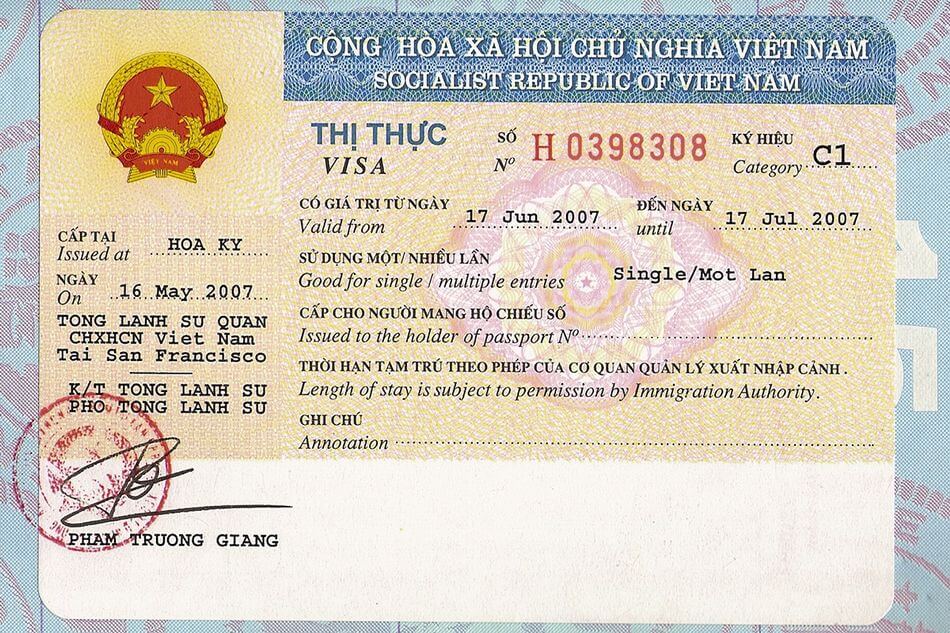
Here is the situation as it stands in 2026. Suriname is not on Vietnam’s visa exemption list. Every Surinamese passport holder requires a valid visa for any stay in Vietnam, regardless of purpose or length. The correct and only standard route in 2026 is the 90-day Vietnam e-visa, applied for online. The old visa on arrival approval letter system — where third-party agents arranged a government letter you collected at the arrivals counter — does not exist anymore as a valid entry mechanism. It has been obsolete since before 2025. Anyone still offering it is selling access to a process that Vietnamese immigration no longer honours.
The e-visa, when applied for correctly, is clean and fast. The problems start when the application is rushed, or when applicants enter names that don’t match their passport’s machine-readable zone. And for Surinamese applicants specifically, the name issue deserves a full section of its own — because Suriname’s extraordinary ethnic and cultural diversity produces name structures that no other country in South America comes close to matching.
Vietnam E-Visa for Surinamese Citizens 2026: The Only Guide You Actually Need
Vietnam E-Visa Requirements for Surinamese Citizens
The Vietnam e-visa for Surinamese citizens covers stays of up to 90 days and comes in two versions: single entry at USD 25 (approximately SRD 950 at current rates) and multiple entry at USD 50 (approximately SRD 1,900). Entirely online. No embassy appointment in Paramaribo or elsewhere. No physical documents mailed anywhere.
Before opening the application form, have these items ready:
- Valid Surinamese passport — minimum 6 months of validity beyond your intended entry date into Vietnam, with at least 2 blank visa pages remaining
- Passport bio-page scan — clean, flat, well-lit JPEG with every field fully legible; no shadow cutting across the text, no reflections, no fingers over any corner
- Passport-style photo — recent, white background, 4×6 cm, no headwear, no glasses
- Confirmed entry and exit ports — the e-visa document names your specific checkpoints; entering through a different airport than declared means refused entry without discussion
- Credit or debit card for payment (Visa and Mastercard accepted on the official portal)
Standard processing on the official Vietnam immigration portal is 3 business days. Urgent processing through an authorized provider like VisaOnlineVietnam can bring that down to 2 to 4 hours when your travel timeline is short or a previous application needs correcting. The approval arrives as a PDF by email. Print it — Vietnam immigration officially requires a hard copy at the arrivals counter, though keeping a phone backup alongside it is sensible.
A timing note for Surinamese travellers: the Vietnam e-visa portal pauses entirely during the Tết Lunar New Year holiday period, typically late January or early February. If your trip falls near that window, apply at least 10 to 15 working days before your PBM departure date.
Denied Boarding at PBM: What Happens When Your Visa Isn’t Ready
Johan Adolf Pengel International Airport. PBM. The KLM check-in hall, the flight to Amsterdam Schiphol that connects onward to Ho Chi Minh City. Your bags are checked. Your seat is confirmed. You reach the counter and pull up your e-visa PDF — and the name reads “RAMDJANAM” when your passport machine-readable strip clearly says “RAM DJANAM” with a space that the form didn’t accommodate. Or the bio-page scan you uploaded six days ago was just dark enough that the portal’s automated verification couldn’t read the passport number field, and the application came back rejected overnight while you were sleeping.
The check-in agent at PBM cannot fix this for you. She is not an immigration officer. She is required, under Vietnamese aviation regulations, to deny boarding to any passenger whose Vietnam entry documentation cannot be verified against their passport. Politely, firmly, and with no available override.
What you do: call our emergency team immediately and do not waste time attempting to resolve it through general airline customer service channels. Through priority processing, we can push through a fresh, correctly formatted Vietnam e-visa in as little as 2 to 4 hours. Depending on whether your route goes through Amsterdam — with its longer layover windows — or through Miami, that timeline may be enough to keep your travel plans intact.
💡 Expert Insight from Stanley Ho: “Over my 20+ years handling travel logistics, the most frequent disruption occurs at the check-in desk due to simple application formatting errors. If you are stuck at the airport and denied boarding, don’t panic—our emergency team can secure a new E-visa clearance through priority channels within hours, saving your flight.”
Apply at least a week before your PBM departure. Read the name formatting section below before you open the application. Save our emergency contact before you travel — not after the problem appears.
The Surinamese Passport Trap: Six Ethnic Communities, Six Sets of Naming Pitfalls
This section exists because Suriname is genuinely one of the most ethnically diverse countries on earth — and that diversity maps directly onto passport naming patterns that create specific, predictable problems on the Vietnam e-visa portal. I want to walk through the main ones.
Dutch-origin names and diacritics stripped in the machine-readable zone. Surinamese passports are Dutch-language documents, and Dutch names routinely include diacritical characters — ë (as in Zoë), ö, ü, é, and others appear in both Dutch surnames and first names. The visual field on your passport bio page shows these characters correctly. The machine-readable strip at the very bottom of the bio page — the two rows of capital letters and chevron symbols — strips every accent mark without exception. ZOET not ZÖET, RENE not RENÉ. The Vietnam e-visa portal validates your entry against that machine-readable strip only. If you type the accented version because it “looks right,” you create a technical mismatch.
Hindustani names and patronymic chain registration. Suriname’s Hindustani community — descendants of indentured workers brought from the Bihar and eastern UP regions of British India in the late 1800s — carries naming traditions where the full name often includes a personal name, a father’s name, and a grandfather’s name in sequence. Dutch civil registration of these names was historically inconsistent: the same family’s names might appear hyphenated in one generation’s passport, spaced in the next, and concatenated in a third. If your passport carries a long Hindustani name chain, the machine-readable strip is your authority for how it’s distributed between surname and given name fields. Do not guess. Read the strip.
Javanese names and the single-name tradition. Suriname’s Javanese community — descendants of workers brought from the Dutch East Indies in the early 20th century — includes individuals whose names originate in a Javanese tradition where a single name (mononym) functions as the complete legal identity. Dutch civil registration handled this by sometimes repeating the single name in both the surname and given name fields, or by entering a placeholder. Whatever your passport’s machine-readable strip shows in those two positions is exactly what goes into the e-visa form. Do not add a second name that doesn’t exist on your passport to satisfy the form’s two-field requirement.
Maroon community names and clan identifiers. Suriname’s Maroon population — descended from Africans who escaped enslavement and founded independent communities in the interior rainforest — carries naming traditions with deep cultural roots in specific clan and community structures. Dutch civil registration of Maroon names has been inconsistent across generations and regions, with the same names sometimes appearing in entirely different romanized forms depending on which civil registry office handled the registration. If you have recently renewed your Surinamese passport, verify that the Latin name in your new document matches exactly what older Vietnamese documents or bookings carry under your name. Discrepancies between passport generations need to be addressed before the e-visa application, not after.
Chinese-Surinamese names and character romanization. Suriname’s Chinese community includes both Hakka and Cantonese-speaking families whose names were transliterated into Dutch civil registers using romanization conventions from the colonial era that differ from modern Pinyin or other contemporary systems. A Chinese-Surinamese passport may carry a surname like “Tjong A Fie” or “A Jing” that reflects this historical Dutch-Hakka transliteration rather than any modern Chinese romanization standard. The machine-readable strip shows this name exactly as registered. Copy it exactly.
The rule that applies to every Surinamese applicant regardless of ethnic background: flip to the bio page, go to the very bottom two lines of text, and copy exactly what you see — plain capital letters, no accents, no special characters, every space and hyphen exactly as printed. That machine-readable strip is the only version that matters.
Skip the Queue: VIP Fast-Track at Vietnam’s Airports
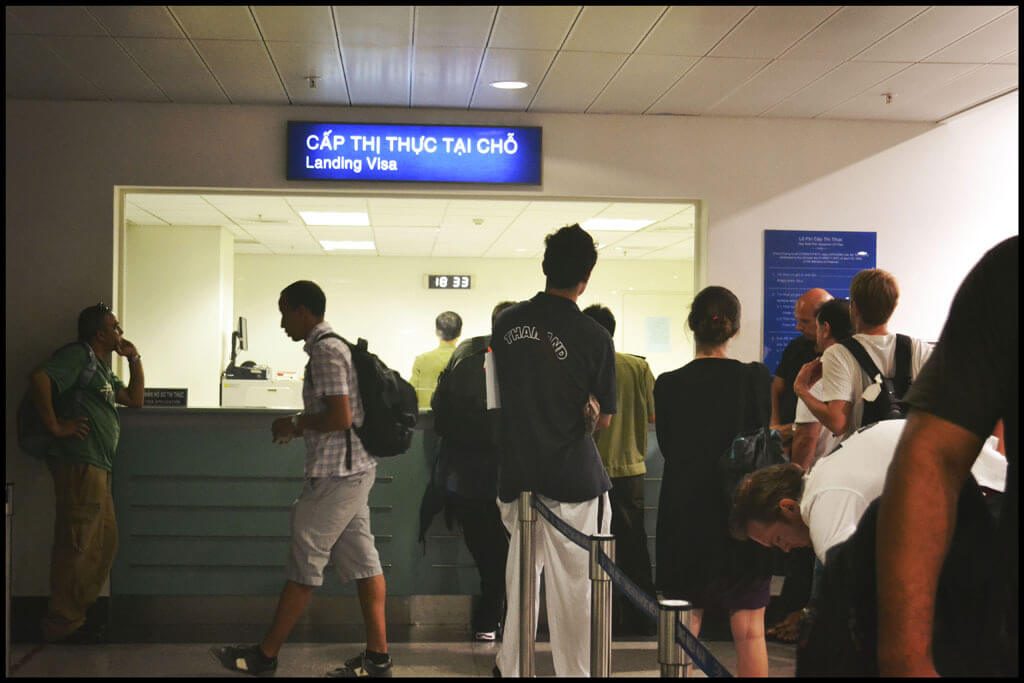
The journey from Paramaribo to Vietnam is one of the longer ones any traveller undertakes. Whether you’re routing through Amsterdam Schiphol (typically 22 to 26 hours total), Miami International (18 to 22 hours), or Port of Spain (with Caribbean and South American connections), you arrive in Vietnam having spent the better part of a day in the air and in transit. Landing at Tan Son Nhat International in Ho Chi Minh City (SGN) and joining a standard immigration queue that can run 60 to 90 minutes during peak season is a taxing way to start what should be an excellent trip.
VIP Airport Fast-Track eliminates that entirely. A personal concierge meets you at the gate or as you exit the aircraft and walks you through the arrivals process — immigration and customs — completely ahead of the general passenger queue. No waiting. No shuffling across a crowded arrivals hall at the end of 24 hours of travel. Available at Noi Bai International in Hanoi (HAN), Tan Son Nhat in Ho Chi Minh City (SGN), and Da Nang International (DAD).
For Surinamese business travellers arriving for meetings, or families travelling with children after a full day of connections, or anyone who simply did the math on how long they’ve been travelling and wants it to end cleanly on arrival — Fast-Track is a sensible decision, not an indulgence.
How to Apply for Your Vietnam E-Visa in 2026
The application process is straightforward. Here is the complete walkthrough:
- Go to the official Vietnam immigration e-visa portal at evisa.gov.vn, or apply through an authorized provider like VisaOnlineVietnam for pre-submission document verification and name-field checking
- Enter your personal details — open your Surinamese passport to the bio page, go to the bottom two lines of machine-readable text, and copy exactly what you see there into the name fields; no accent marks, no characters outside plain capital A–Z, every space and hyphen exactly as printed in the strip
- Choose your entry type — single entry (USD 25) for a straightforward one-way trip into Vietnam; multiple entry (USD 50) if you’re travelling regionally through Southeast Asia with Vietnam re-entries planned
- Select your entry and exit ports — Surinamese travellers typically enter at SGN (Ho Chi Minh City) or HAN (Hanoi); these are locked into the visa document and cannot be changed post-submission without a full new application
- Upload your passport bio-page scan and your photo — flat surface, strong even light, no shadows across any text field; photo must have a white background, be recent, and meet the 4×6 cm specification
- Pay by credit or debit card — Visa and Mastercard accepted
- Receive your approval PDF by email — standard 3 business days; urgent processing through an authorized provider delivers in 2–4 hours
- Print your e-visa — minimum one hard copy for the PBM check-in desk and one for Vietnam immigration on arrival; print a backup and put it in a different bag
That is the complete Vietnam visa for Surinamese citizens process. The application itself takes fifteen minutes when done carefully. The name field is where most Surinamese applicants need to slow down — because the diversity of naming traditions in Surinamese passports creates more variation than almost any other passport on earth, and the Vietnam e-visa portal has no tolerance for mismatches.
Frequently Asked Questions
Do Surinamese citizens need a visa to visit Vietnam in 2026?
Yes. Suriname is not on Vietnam’s visa exemption list, so Surinamese passport holders require a valid visa for every stay in Vietnam regardless of length or purpose. The correct entry route in 2026 is the 90-day Vietnam e-visa, applied for online through evisa.gov.vn or an authorized provider. The old visa on arrival approval letter system is completely dead — it is not a valid entry mechanism under Vietnamese immigration law in 2026, and any service still marketing it is operating on years-old information. Do not pay for a VOA letter.
How long does the Vietnam e-visa processing take for applicants in Suriname?
Standard processing on the official portal is 3 business days. Urgent processing through an authorized service provider like VisaOnlineVietnam can deliver a valid approval in 2 to 4 hours. Given that flights from PBM to Vietnam involve at least one major connection and typically 18 to 26 hours of total travel time depending on your routing, I recommend applying a minimum of 7 to 10 days before your PBM departure date. Not your Vietnam arrival date — your Paramaribo departure date. Build in correction time.
My Surinamese passport has a very long name from my Hindustani/Javanese heritage. How do I enter it correctly?
The answer is the same regardless of heritage: copy from the machine-readable strip at the very bottom of your passport bio page — the two rows of capital letters. That strip shows exactly how the Dutch civil register has distributed your full name between the surname and given name positions, and it is what Vietnam immigration validates your e-visa against. If your name is long and the strip truncates it, enter the truncated version. If your Javanese name appears in both the surname and given name fields, enter it in both. Do not rearrange, do not add missing names from memory, do not enter the accented Dutch version instead of the plain strip version. The strip is authoritative.
Can I enter Vietnam multiple times on a single e-visa?
Yes, if you select and pay for the multiple entry option (USD 50) at the time of application. The multiple entry e-visa covers up to 90 days across all your entries within that validity window, which is useful for Surinamese travellers doing regional circuits through Southeast Asia — in and out of Vietnam while also visiting Thailand, Cambodia, or Laos. If you select single entry and try to re-enter Vietnam after leaving, you will be refused. Choose correctly before you submit.
What happens if I overstay my Vietnam e-visa?
Overstaying a Vietnamese visa is taken seriously. Consequences include fines at the airport on departure, potential bans on future Vietnam entry ranging from 6 months to several years, and — in extended overstay cases — possible detention while documentation is resolved. The 90-day e-visa cannot be extended by reapplying online while inside Vietnam. If you need more time, exit before your visa expires and apply fresh, or engage a licensed Vietnamese immigration agency before the expiry date to pursue an in-country extension. Plan this in advance from Paramaribo, not at the last minute from a guesthouse in Hội An.
About the Reviewer: Stanley Ho is the CEO of VisaOnlineVietnam and a recognized expert consultant in the international aviation and travel service industry. With decades of experience navigating complex immigration regulations, Stanley and his team specialize in providing seamless visa solutions, fast-track airport services, and emergency travel assistance for global citizens visiting Vietnam.