Vietnam E-Visa for Uruguayan Citizens 2026: The Only Guide You Actually Need
The vietnam visa for Uruguayan citizens in 2026 is simpler, faster, and more traveler-friendly than it has ever been — but only if you know what you’re actually doing. The problem I keep running into, year after year, is that travelers from Uruguay arrive at Carrasco International carrying information that was accurate in 2019 and has since been completely overturned. Old blog posts. Embassy website pages that haven’t been touched in years. WhatsApp groups where someone’s cousin swears you can still get a “letter” at the airport. You can’t. That system is gone.
Vietnam has become genuinely magnetic for South American travelers. The food alone — bánh mì at dawn, phở that costs less than a cup of coffee at home, grilled seafood on the Hội An riverfront — is worth the journey. And Uruguay, for a small country, produces an impressive number of curious, well-traveled citizens who have quietly discovered that Southeast Asia, and Vietnam in particular, delivers an experience nothing in the Atlantic world can replicate. But getting there cleanly requires one thing done right before you board: your 90-day Vietnam E-visa.
The old Visa on Arrival approval letter system — where a third-party agent issued you a paper document and you queued for a stamp on arrival — is completely dead and legally obsolete in 2026. Not a shortcut. Not an alternative. Gone. The Vietnam E-visa is the standard: 100% online, single or multiple entry, valid for 90 days. That’s what every legitimate traveler from Uruguay is using, and that’s what this guide covers in full.
Vietnam E-Visa Requirements for Uruguayan Citizens
The vietnam visa for Uruguayan citizens runs through Vietnam’s official e-visa portal and the requirements are clean and manageable. The trap isn’t the list — it’s the details inside each item. Here’s what you need:
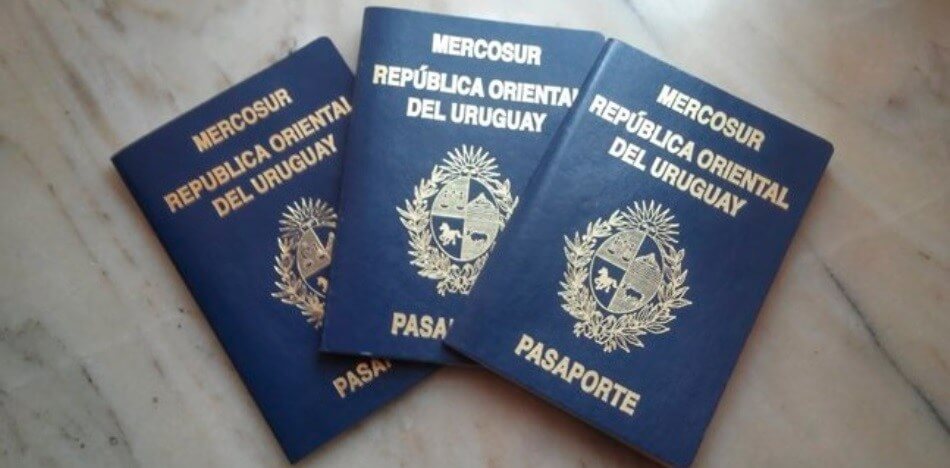
Your Uruguayan passport must be valid for at least 6 months beyond your intended arrival date in Vietnam. Airlines check this before immigration ever sees your documents. If you’re cutting it close, renew the passport before you book the flight — not after.
Documents required for your e-visa application:
- Valid Uruguayan passport (biometric, valid 6+ months past travel date)
- Passport-style photo: white background, full face, no glasses, taken within the last 6 months
- Clear, high-resolution scan of your passport’s biographical data page
- Intended Vietnam entry and exit dates
- First night accommodation address in Vietnam (hotel name and address is fine)
- Valid international credit or debit card for the application fee
Standard processing takes 3 business days. Once approved, you’ll receive your e-visa as a PDF by email. Vietnam accepts it digitally on your phone or printed — either works fine at immigration. The 90-day validity covers both tourism and business, with single-entry or multiple-entry options available. If you’re planning to do the classic circuit of Vietnam, Cambodia, and Laos, the multiple-entry version is the smarter play.
Denied Boarding at MVD: What Happens When Your Visa Isn’t Ready
Let me paint you a picture I’ve seen unfold at Carrasco International Airport (MVD) in Montevideo more times than I’d like to admit.
Traveler arrives at check-in for a flight connecting through Buenos Aires or São Paulo toward Ho Chi Minh City. Suitcase packed, itinerary printed. The agent types something, pauses, looks up. “We can’t find an approved visa.” Or: “Your e-visa name doesn’t match your passport.” The flight boards in ninety minutes and there is no Vietnamese consulate in Uruguay. The nearest diplomatic representation is in Buenos Aires, Argentina — hours away and useless for a same-day crisis.
This is not a theoretical scenario. Name mismatches, last-minute applications, and photo rejections catch Uruguayan travelers every single month. It is entirely preventable, and entirely devastating when it happens.
If you’re in this situation right now — reading this from an airport, flight looming — our Super Urgent Visa Service can push an emergency e-visa clearance through priority processing channels in 2 to 4 hours. Contact us the moment you hit trouble. It’s not a miracle for every case, but it has saved more trips than I can count.
💡 Expert Insight from Stanley Ho: “Over my 20+ years handling travel logistics, the most frequent disruption occurs at the check-in desk due to simple application formatting errors. If you are stuck at the airport and denied boarding, don’t panic—our emergency team can secure a new E-visa clearance through priority channels within hours, saving your flight.”
The lesson is simple: apply for your Vietnam visa for Uruguayan citizens at minimum 7 to 10 days before departure. The standard processing is reliable, but you need time to fix a rejection — and rejections, when they happen, happen for correctable reasons.

The Uruguayan Passport Trap: Name Formatting Errors That Kill Applications
This is the section nobody writes. It’s also the section responsible for the highest rejection rate among South American applicants — and Uruguayan travelers are not immune.
Uruguay uses the Spanish double-surname system: every citizen carries a paternal surname and a maternal surname, both appearing in full on their passport. A typical Uruguayan passport reads something like: Valentina Lucía Fernández Cabrera. Two given names, two surnames. Four components in the full legal name.
The Vietnam e-visa portal offers exactly two name fields: First Name and Last Name. This is where the confusion starts.
The most common error: an applicant enters only the paternal surname in the Last Name field and leaves the maternal surname out entirely. So “Fernández Cabrera” becomes just “Fernández” on the e-visa. The portal accepts it without complaint. The e-visa is issued. But at Vietnamese immigration — whether at Noi Bai in Hanoi or Tan Son Nhat in Ho Chi Minh City — the officer cross-references your e-visa against your passport. The names don’t fully align. Flags go up.
The correct approach: include both surnames in the Last Name field, separated by a space, exactly as they appear in your passport’s data zone. FERNANDEZ CABRERA — no accent on the E, plain Latin characters throughout.
Which brings us to the second trap, and a particularly common one for Uruguayan names: accented vowels and the letter ñ. Uruguay’s naming culture is rich with Spanish diacritics — Núñez, Rodríguez, Pérez, Muñoz, García. The Vietnam e-visa portal does not support these characters. You must strip them entirely. The accent on the i in Rodríguez becomes a plain i. The ñ in Muñoz becomes a plain n. The result — MUNOZ, RODRIGUEZ, GARCIA — matches how these names appear in the machine-readable zone at the bottom of your passport’s biographical page, which has already been transliterated to plain ASCII.
There’s a third issue that comes up specifically with compound Spanish given names using connectors: names like María de los Ángeles or José de Jesús. The “de” and “de los” are part of the legal name, but online systems sometimes mishandle the preposition as a separate field or reject the entry. Enter it in all caps, without accents, as a continuous string: MARIA DE LOS ANGELES — keeping the connector in lowercase only if that’s how it appears in the machine-readable zone of your passport.
My standing advice: before filling in any name field on the e-visa portal, open your passport to the biographical page and read the two lines of small print at the very bottom — the machine-readable zone. That all-caps, accent-free version of your name is the one to copy. Match it exactly, and your application will clear.
Skip the Queue: VIP Fast-Track at Vietnam’s Airports
You’ve survived the flight from Montevideo — connecting through Buenos Aires or São Paulo, then onward to Southeast Asia, likely 22 to 28 hours of travel in total. The last thing anyone needs is to land at Tan Son Nhat International Airport in Ho Chi Minh City and face an immigration queue that stretches back 45 minutes into the terminal.
VIP Airport Fast-Track solves this completely.
A personal concierge meets you at the aircraft door the moment you disembark — ahead of the general passenger flow. You’re guided directly through the priority and diplomatic immigration channel, completely bypassing the standard queue. Documents are processed first, stamps are applied within minutes, and you’re typically into arrivals in under 20 minutes from the moment the wheels stop.
The service is available at Noi Bai International Airport (HAN) in Hanoi, Tan Son Nhat International Airport (SGN) in Ho Chi Minh City, and Da Nang International Airport (DAD). For business travelers, families with young children, or anyone who has just spent the better part of a day in transit from Uruguay, this isn’t an indulgence — it’s a sensible investment in how you want to start your trip.
How to Apply for Your Vietnam E-Visa in 2026
The entire process is online and takes 20 minutes if your documents are ready. Here’s the exact sequence:
Step 1: Navigate to Vietnam’s official e-visa portal or use a trusted service like VisaOnlineVietnam.com, which adds application review, error-checking, and human support throughout the process.
Step 2: Enter your personal details — full name exactly as it appears in your passport’s machine-readable zone (no accents, both surnames in the Last Name field), date of birth, nationality, passport number, and expiry date. Uruguayan applicants: read the name formatting section above before touching this step.
Step 3: Upload your photo and passport data page scan. The photo requirements are strict — white background, full face, no glasses, recent. A blurry or poorly lit photo is one of the most common rejection triggers and the easiest to avoid. Take two minutes to do it properly.
Step 4: Enter your Vietnam travel details — intended entry date, intended exit date, and your first accommodation address in Vietnam.
Step 5: Pay the application fee by credit or debit card. Major international cards are accepted.
Step 6: Submit and wait. Standard processing is 3 business days. Urgent options are available if you’re applying close to your travel date and need faster clearance.
Step 7: Receive your approved e-visa PDF by email. Save it digitally and optionally print a copy. Vietnamese immigration accepts both. Board your flight knowing the paperwork is done.
Frequently Asked Questions
Can Uruguayan citizens still get a visa on arrival in 2026? No. The Visa on Arrival approval letter system — where a third-party agency issued a paper document and you paid a stamping fee on arrival — no longer exists. It was officially retired when Vietnam expanded the e-visa program. In 2026, the 90-day e-visa applied for online is the only valid tourist entry document. Any website or agency still selling “approval letters” is operating outside the current legal framework.
How long is the Vietnam E-visa valid for Uruguayan passport holders? The standard e-visa grants 90 days from your date of entry, available in single or multiple-entry format. This covers the vast majority of tourist itineraries comfortably. If you’re planning a stay longer than 90 days, you would need to explore other visa categories — our team can advise on those options.
My Uruguayan name has accents and two surnames. How do I fill in the e-visa form? Use the machine-readable zone at the bottom of your passport’s photo page as your reference — the all-caps, accent-free version of your name that already appears there. Enter both surnames (paternal and maternal) in the Last Name field, separated by a space. Remove all diacritical marks: é becomes e, ñ becomes n, and so on. This is the format the Vietnam immigration system expects, and it will match your passport data exactly.
What if my Vietnam e-visa is still processing when my departure date approaches? Contact us immediately if you’re within 72 hours of departure and haven’t received your approval. Our urgent processing service can escalate your case through priority channels and typically delivers clearance within 2 to 4 hours. Do not simply board the flight hoping it will sort itself out — it won’t, and airlines will deny boarding without a valid approved e-visa in hand.
Is the Vietnam E-visa accepted at all entry points, including land borders? Yes. The 2026 Vietnam E-visa is valid at all designated international entry points: airports, land border crossings, and seaports. This includes Noi Bai (HAN), Tan Son Nhat (SGN), Da Nang (DAD), Cam Ranh, Phu Bai, Cat Bi, and all official international land and maritime crossings. This is a significant improvement over the old VOA system, which was restricted to air entry at a limited number of airports.
About the Reviewer: Stanley Ho is the CEO of VisaOnlineVietnam and a recognized expert consultant in the international aviation and travel service industry. With decades of experience navigating complex immigration regulations, Stanley and his team specialize in providing seamless visa solutions, fast-track airport services, and emergency travel assistance for global citizens visiting Vietnam.